Mineralogical characteristics
Vesuvianite is a silicate from the sorosilicate group that forms mainly by contact metamorphism in limestones with impurities. It may also appear in alpine cracks and in areas related to magmatic masses.
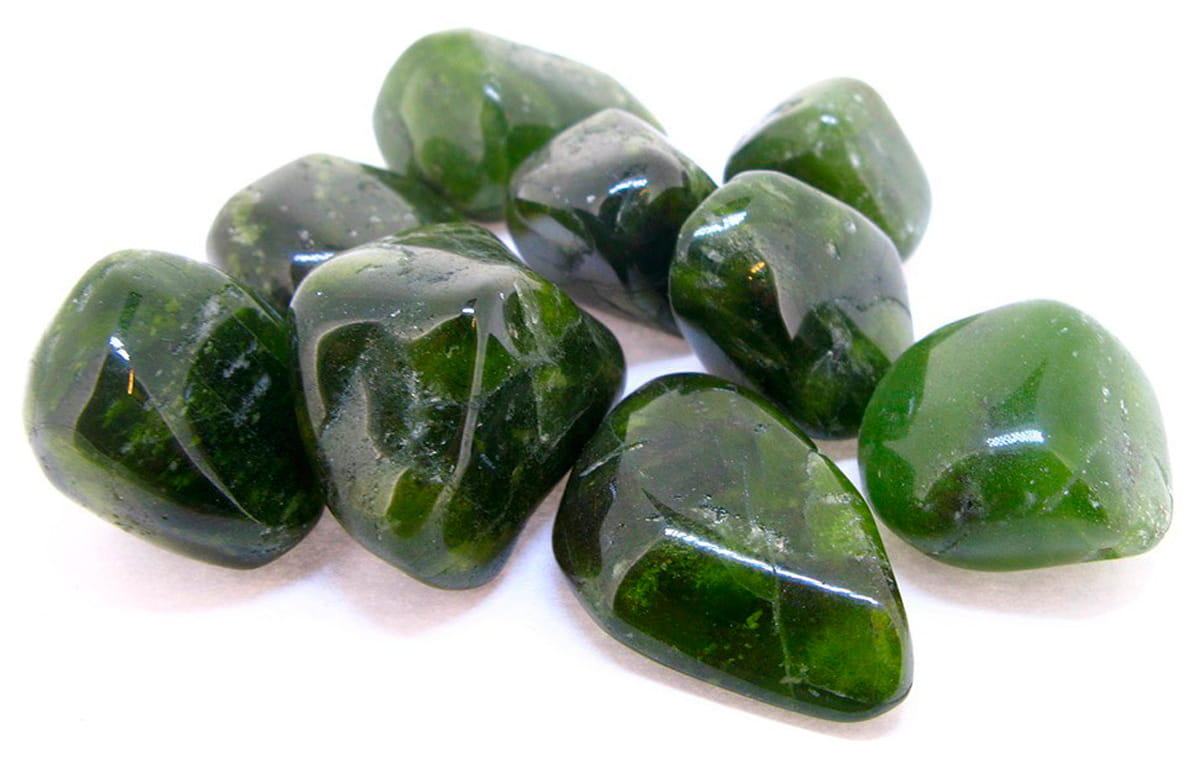
Its crystals are usually prismatic, elongated and vitreous in luster, often with pyramidal terminations. It may also occur in compact masses or columnar aggregates. The most common colors are green and yellowish green, although brown, reddish, black, bluish or violet specimens exist, depending on the elements present in its structure.
Vesuvianite, also called vesuvian or idocrase, is named after Mount Vesuvius in Italy, where it was described. The old name idocrase comes from the Greek eidos, meaning “appearance”, and krasis, meaning “mixture”, referring to its variable appearance.
Because of its chromatic variety and well-defined crystallization, vesuvianite is appreciated by collectors as well as for ornamental use in good-quality specimens.
Deposits
United States, Russia, Brazil, Mexico, Kenya, Switzerland, Sri Lanka and Canada.
Therapeutic properties
Vesuvianite is considered a cleansing and transmuting stone. Traditionally, it is used to bring mental clarity and help overcome negative or repetitive thought patterns.
It is said to encourage the release of old memories, emotional blockages and difficult experiences, promoting a greater sense of inner security. Its energy is often described as gentle, compassionate and stabilizing.
It is also associated with sincerity, creativity and the ability to assume one’s own responsibility. In this sense, it is used as energetic support for making decisions with more balance and personal coherence.
On a physical level, within the mineral therapy tradition, it is linked to nutrient assimilation and strengthening tooth enamel. These attributions belong to the energetic field and do not replace medical care.