Mineralogical characteristics
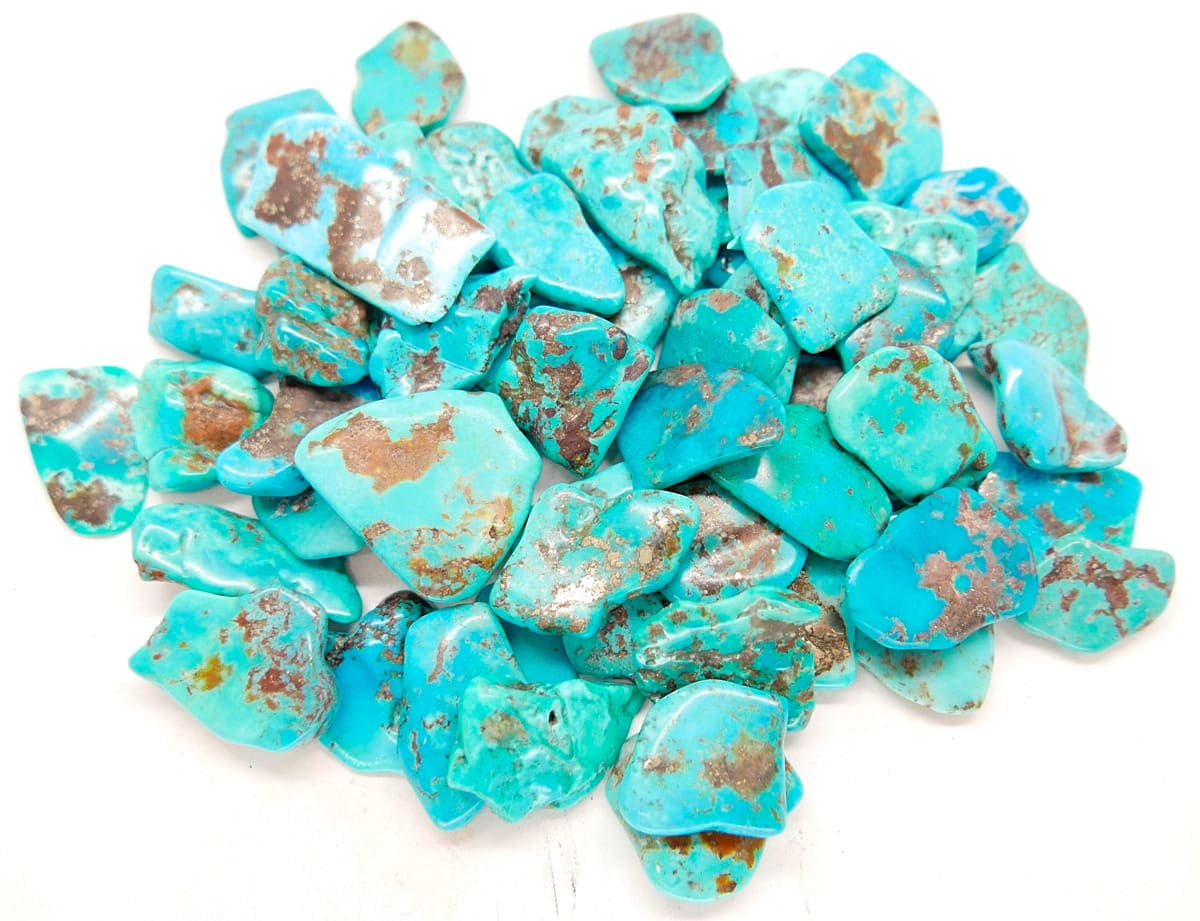
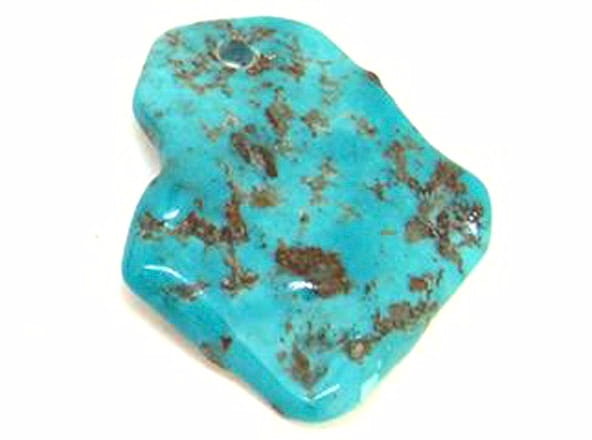
Turquoise is a mineral from the phosphate group, composed mainly of hydrated aluminum and copper phosphate. Its characteristic blue-green color is precisely due to the presence of copper and may shift toward greener tones when it contains iron.
Turquoise usually forms in arid environments and oxidation zones of copper deposits, appearing in veins and in phosphate-rich schist veins. It generally occurs in massive or microcrystalline habit and rarely forms well-defined crystals.
The name turquoise comes from the French expression "pierre turquoise", because it reached Western Europe through Turkey during the 16th century.
It is one of the oldest ornamental stones in history. It has been used since Antiquity in civilizations such as Ancient Egypt, pre-Columbian Mesoamerican cultures, the Indus Valley civilization and China.
Turquoise may contain inclusions of minerals such as limonite, pyrite or chalcedony, and may also appear associated with minerals such as chrysocolla and malachite.
Deposits
United States, Iran, Mexico, Egypt, China, Peru, Poland, Russia, Tibet, Afghanistan and Kenya.
Therapeutic properties
Turquoise is traditionally associated with communication, protection and emotional balance. It is especially related to the throat chakra, supporting expression, communication and emotional clarity.
It is also linked to the third eye, so it is considered a stone used to enhance intuition, meditation and inner perception. Its energy is described as gentle, fresh and balancing.
Since Antiquity, turquoise has been used as a protective amulet and healing stone. According to energetic tradition, it helps support rest, revitalize the body and bring a sense of general well-being.
On an energetic level, it is said to contribute to emotional and physical regeneration, symbolically helping stimulate tissue regeneration and balance the energetic body.