Mineralogical characteristics
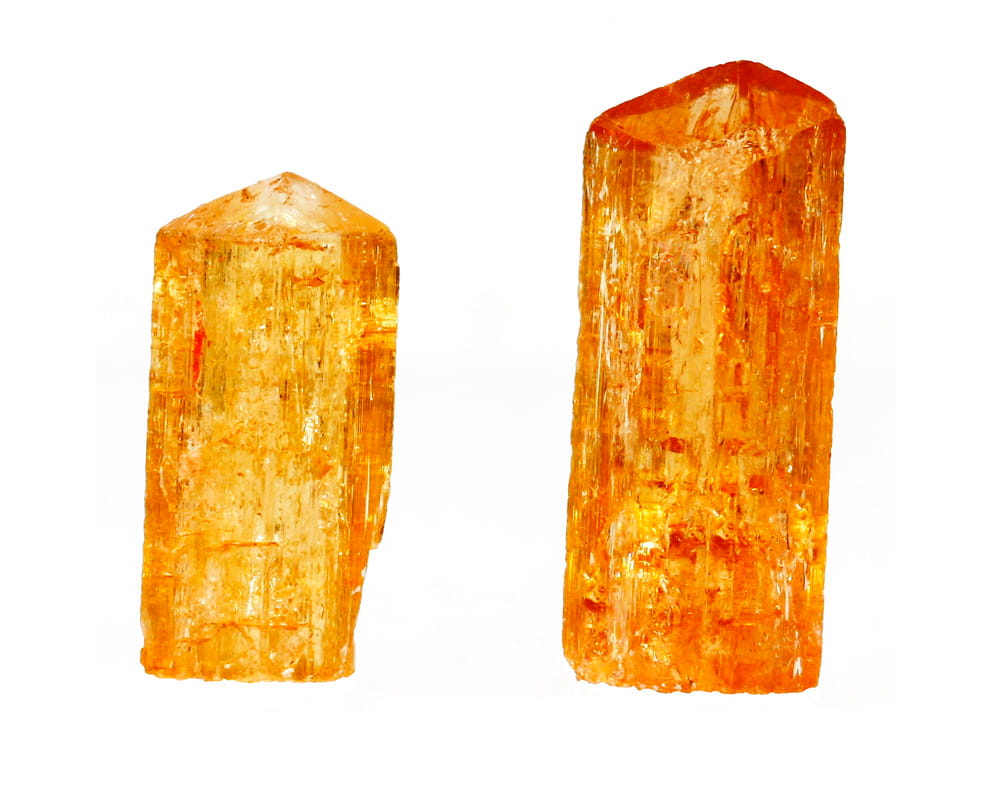
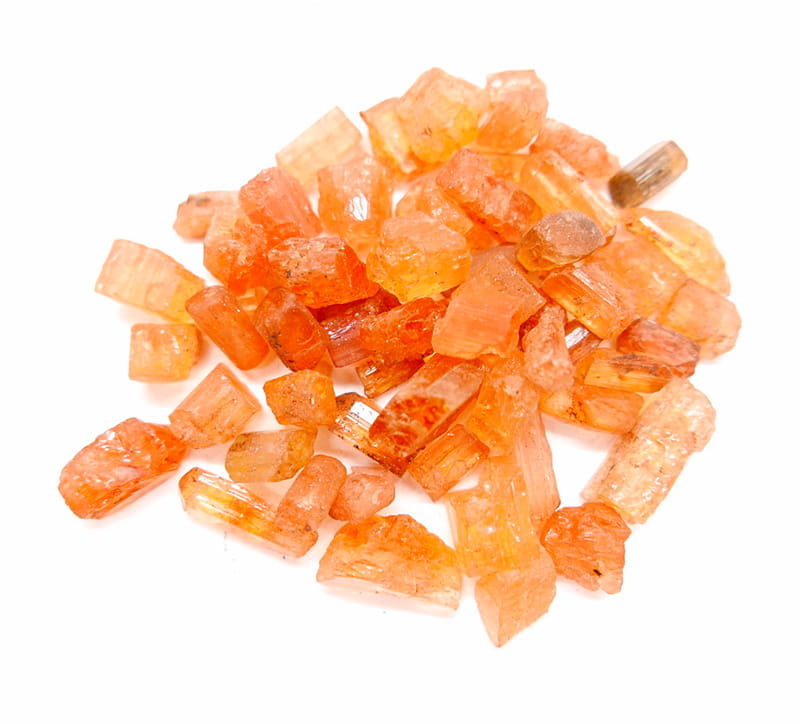
Imperial topaz or golden topaz is a variety of topaz especially valued for its yellow-orange, golden or pinkish color. Most of the most prized specimens come from Brazil, especially from the Minas Gerais region.
Topaz is a fluorine and aluminum aluminosilicate that forms in environments related to igneous rocks. It is usually found in pegmatites, rhyolite cavities and hydrothermal veins, where it develops well-formed prismatic crystals. Its hardness of 8 on the Mohs scale makes it a resistant gem suitable for jewelry, although it must be treated with care due to its perfect basal cleavage.
The name topaz derives from the Sanskrit word tapaz, meaning “fire”. It is also historically related to the ancient Island of Topazios in the Red Sea, now known as Zabargad Island.
Deposits
Brazil, Russia, Zambia, United States and Sri Lanka.
Therapeutic properties
Imperial topaz is traditionally associated with the 3rd chakra, related to willpower, personal confidence and vital energy. It is considered a stone of creativity, joy, generosity and abundance.
It is said to strengthen and recharge on both spiritual and physical levels, encouraging connection with inner strength and self-confidence. It is also used symbolically to overcome limitations, focus goals and move forward with determination.
Imperial topaz helps discover inner richness, connect with one’s own values and enhance optimism, confidence and love. On a physical level, it has traditionally been attributed regenerative and revitalizing action.