Mineralogical characteristics
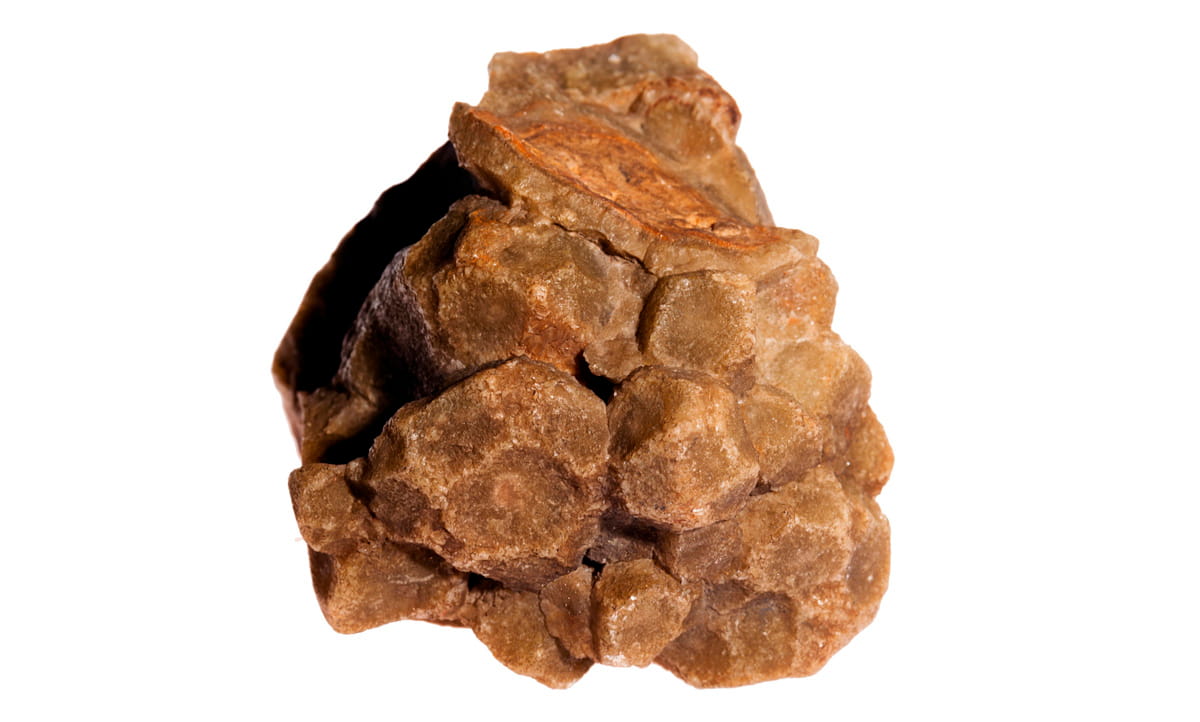
Smithsonite, also known as zinc spar, is a zinc carbonate whose chemical formula is ZnCO3. It is usually found as stalactites, botryoidal masses or compact aggregates, although it can also form rhombohedral and scalenohedral crystals, often with curved surfaces or a rice-grain appearance.
It can appear in a wide variety of colors, such as white, yellow, green, blue, pink, brown or colorless. These tones depend on the impurities and associated elements present during its formation.
Smithsonite appears mainly in oxidation zones of zinc ore deposits, as well as in limestone rocks close to these deposits. For this reason, it is usually related to other secondary zinc minerals.
Its name comes from James Smithson, a British chemist and mineralogist, founder of the Smithsonian Institution in the United States.
Deposits
United States, Australia, Germany, Greece, Italy, Mexico, Zambia and Namibia.
Therapeutic properties
Smithsonite is considered a stone of warm, gentle and soothing energy. It is associated with emotional calm and inner healing processes, especially when working gradually with accumulated pain.
On an energetic level, it is said to encourage chakra alignment and help develop psychic sensitivity. It is also related to serene leadership, harmony in relationships and the ability to act from a more balanced attitude.
On the emotional plane, smithsonite is used to work with the inner child, soften old wounds and accompany processes of internal reconciliation.
On a healing level, it is said to be beneficial for the immune system, digestive system, fertility, breasts and osteoporosis.