Mineralogical characteristics
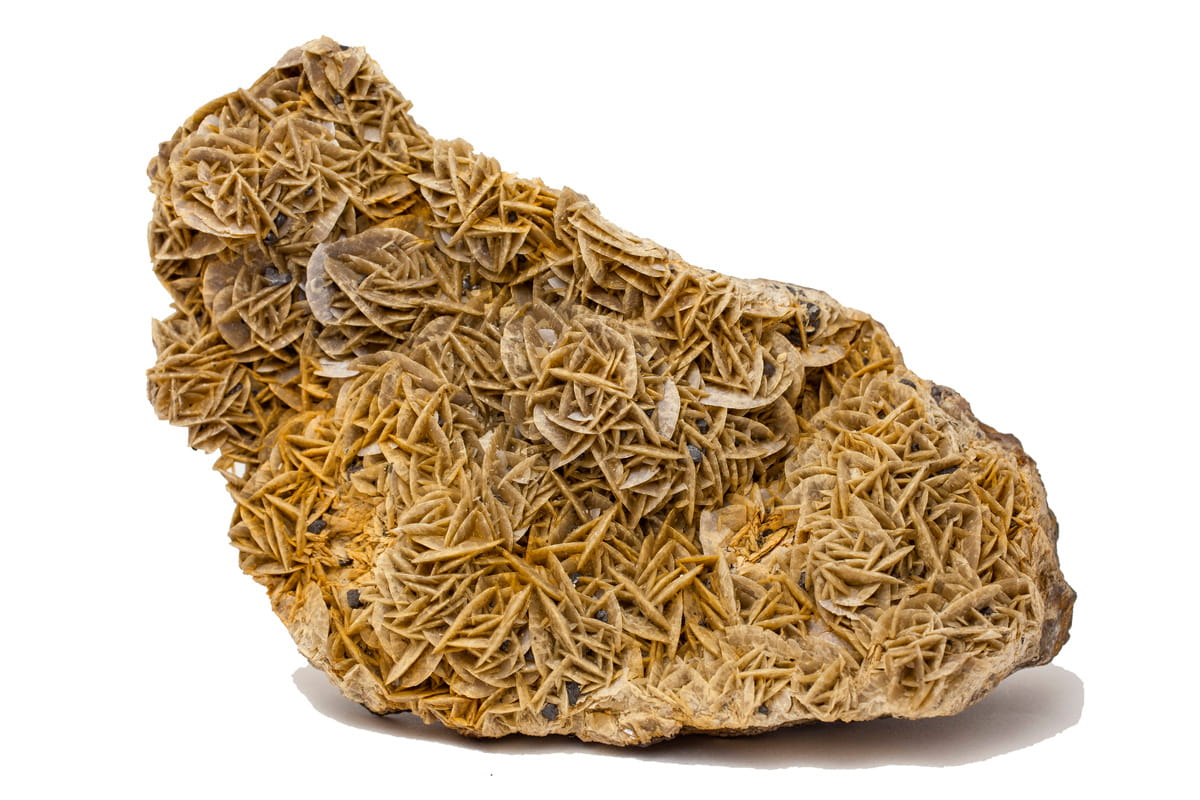
Siderite is an iron carbonate with a calcite structure. It can form rhombohedral crystals with curved surfaces, although it also appears in scalenohedral, tabular or prismatic crystals. It generally occurs in massive or granular form, and sometimes with botryoidal or globular habit.
From a mineralogical point of view, siderite is composed of iron carbonate, with the chemical formula FeCO3. It is an important iron ore and can be found associated with quartz and other minerals in different types of rocks. Its color varies between yellowish, brown, dark brown, greyish or almost black tones, depending on its composition and degree of alteration.
It is widely distributed in sedimentary, igneous and metamorphic environments. It can also appear in hydrothermal veins and iron-rich deposits. Its high density and metallic content make it an easily identifiable mineral within the carbonate group.
The name siderite comes from the Greek “sideros”, meaning “iron”, in direct reference to its composition. In the past it was also known as chalybite.
Deposits
United Kingdom, United States, Canada, Brazil and South Africa.
Therapeutic properties
Siderite is considered a stone of grounding and connection with the energy of the Earth. It is used to bring stability, firmness and a more practical attitude toward everyday situations.
On an energetic level, it is associated with good sense, realism and pragmatism. It helps keep one’s feet on the ground, encouraging a more objective and organized view of problems.
It is also considered a useful stone for recovering inner strength in moments of tiredness or dispersion. On a healing level, it is said that siderite helps restore vitality and reinforce physical energy.