Mineralogical characteristics
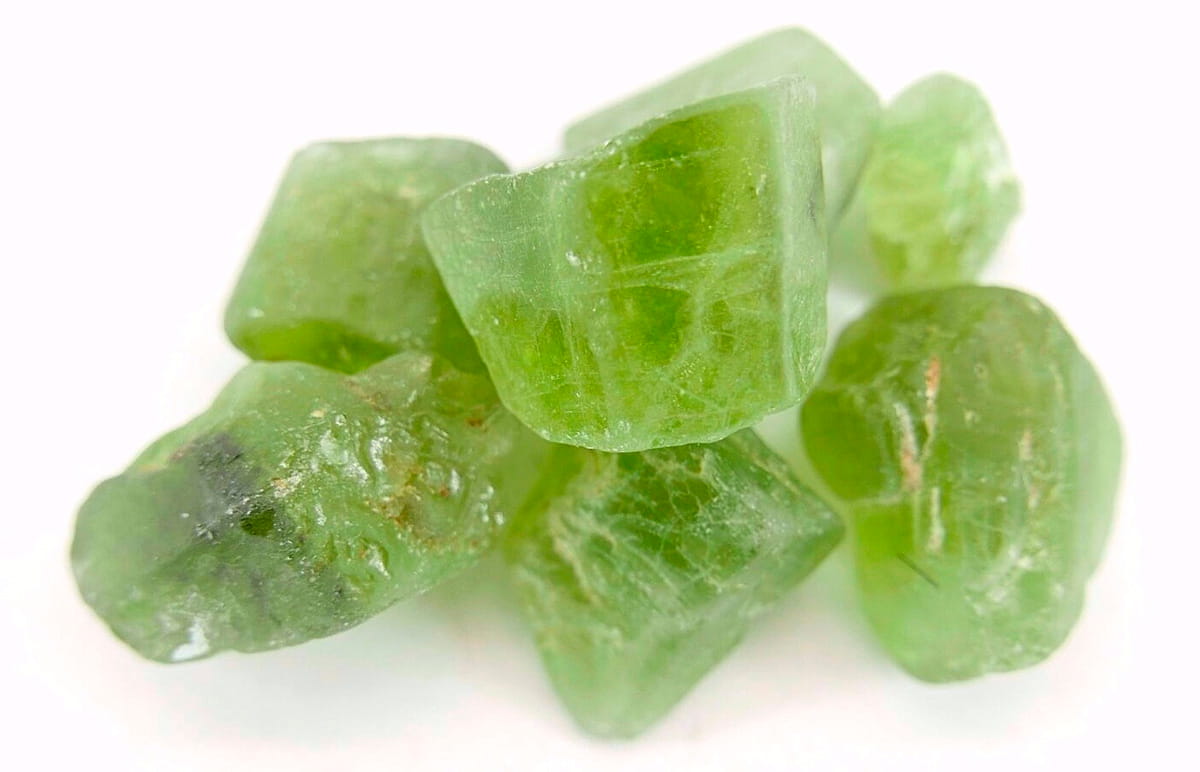
Olivine is considered an important petrogenic mineral, as it is present in much of the Earth’s crust. Olivine has also been found in iron and stony meteorites. In gem quality, olivine takes the name peridot, and its main source is found in Pakistan.
Olivine belongs to the group of neosilicates or orthosilicates, formed by isolated groups of silica tetrahedra. The minerals in the forsterite-fayalite solid solution series are called olivine.
The green color of olivine is due to its iron content. White and light tones are due to the iron of fayalite, and black or dark tones are due to the magnesium of forsterite.
Olivine usually forms in igneous rocks, such as basalt and peridot.
Deposits
Pakistan, China, Brazil, South Africa, Australia, United States, Russia, Ireland and Canary Islands.
Therapeutic properties
Olivine or peridot is a stone for moving forward and evolving. It is associated with the heart chakra and encourages self-love and relationships. Olivine is considered a cleansing stone; it is fresh and vigorous, and helps open consciousness to new possibilities for growth. It encourages detachment and connection with one’s own wisdom. It enhances psychological clarity and the search for vision.
On a healing level, it is said to help regenerate tissues and strengthen the eyes and skin.