Mineralogical characteristics
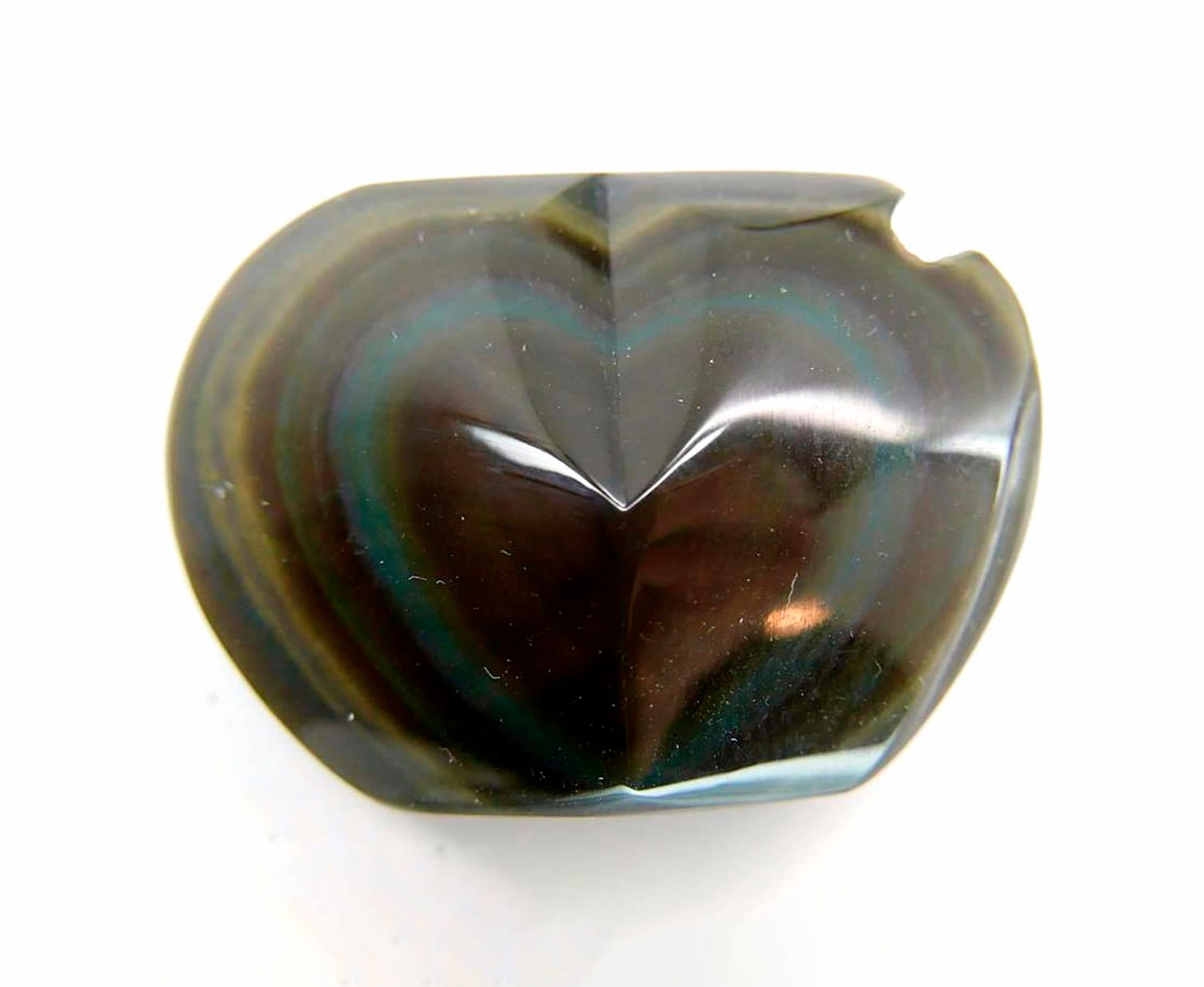
Rainbow obsidian is a variety of obsidian that displays iridescent chromatic bands and colors, caused by inclusions of magnetite nanoparticles.
Obsidian is not considered a mineral, as it is a natural glass of volcanic origin formed by the rapid cooling of silica-rich magmas. It is an igneous rock with high silica content and conchoidal fracture.
The name obsidian comes from the Latin "lapis obsianus", "obsidian stone", a name derived from Obsius, a Roman man, supposedly a well-known explorer or naturalist, mentioned by Pliny (1st century AD).
In ancient times, obsidian was highly valued because of its conchoidal fracture, which allows very sharp points and cutting tools to be made. It was also used as an amulet and as ornamentation. Mesoamerican cultures polished obsidian to make mirrors, as it has a vitreous and reflective luster. Today obsidian is used in jewelry making, ornamentation and in the manufacture of surgical cutting blades.
Deposits
Mexico and United States.
Therapeutic properties
Rainbow obsidian is considered a powerful stone of personal growth. As a black stone, it is used for protection, cleansing and purification. It is related to the 1st chakra, to Mother Earth, and represents the integration of light into the earthly world in a conscious and dynamic way. It is said that rainbow obsidian acts more gently than black obsidian and helps release codependencies.
Obsidian is known for its strength and healing properties. Symbolically, it represents the “mirror” in which the totality of the self is reflected, with its shadow and its light. One of its characteristics is that it directly shows limiting and shadowed aspects of oneself, giving the opportunity to heal, release or integrate them. For this purpose, it can bring blockages, traumas and memories from the past to the surface. It is recommended to be aware of its properties and its mobilizing capacity before using it.