Mineralogical characteristics
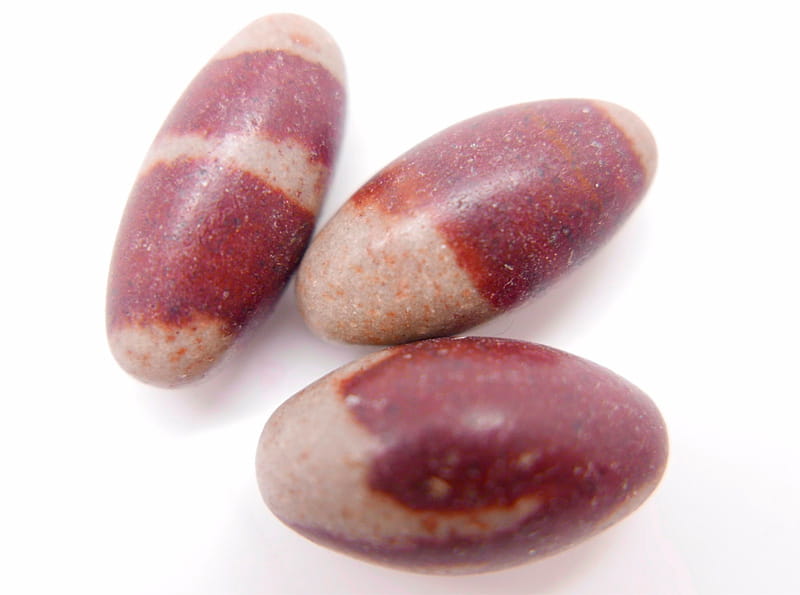
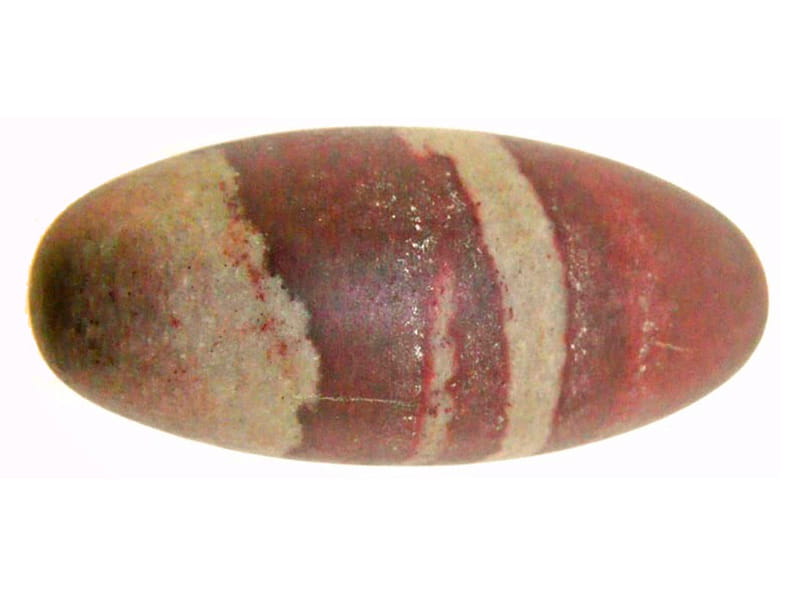
Lingam stones, also called Shiva Lingam, are natural pebbles formed in the Narmada River, in the Mandhata mountains, in west-central India.
Lingams are a variety of cryptocrystalline quartz with jasper, agate and basalt. It is composed of silica and usually contains inclusions of iron and magnesium. Its hardness is 7 on the Mohs scale.
The name lingam comes from Sanskrit and has several meanings, including mark, sign and phallus.
In traditional Hindu culture, the lingam is an object of worship and represents the incarnation of the god Shiva, the dynamic and expressive masculine energy. The lingam is often represented together with the yoni, symbol of the goddess Shakti, the creative feminine energy. In tantric tradition, the shiva lingam represents the universe, formed by the union of masculine and feminine energy. The light grey markings represent masculine energy, and the red and brown markings represent feminine energy.
Deposits
India
Therapeutic properties
The lingam stone symbolizes love and the union of opposites. It is considered a healing stone that supports self-esteem and inner peace. It is said that lingam encourages balance, cleansing and transmutation. It is especially indicated for healing the second chakra and for fertility.