Mineralogical characteristics
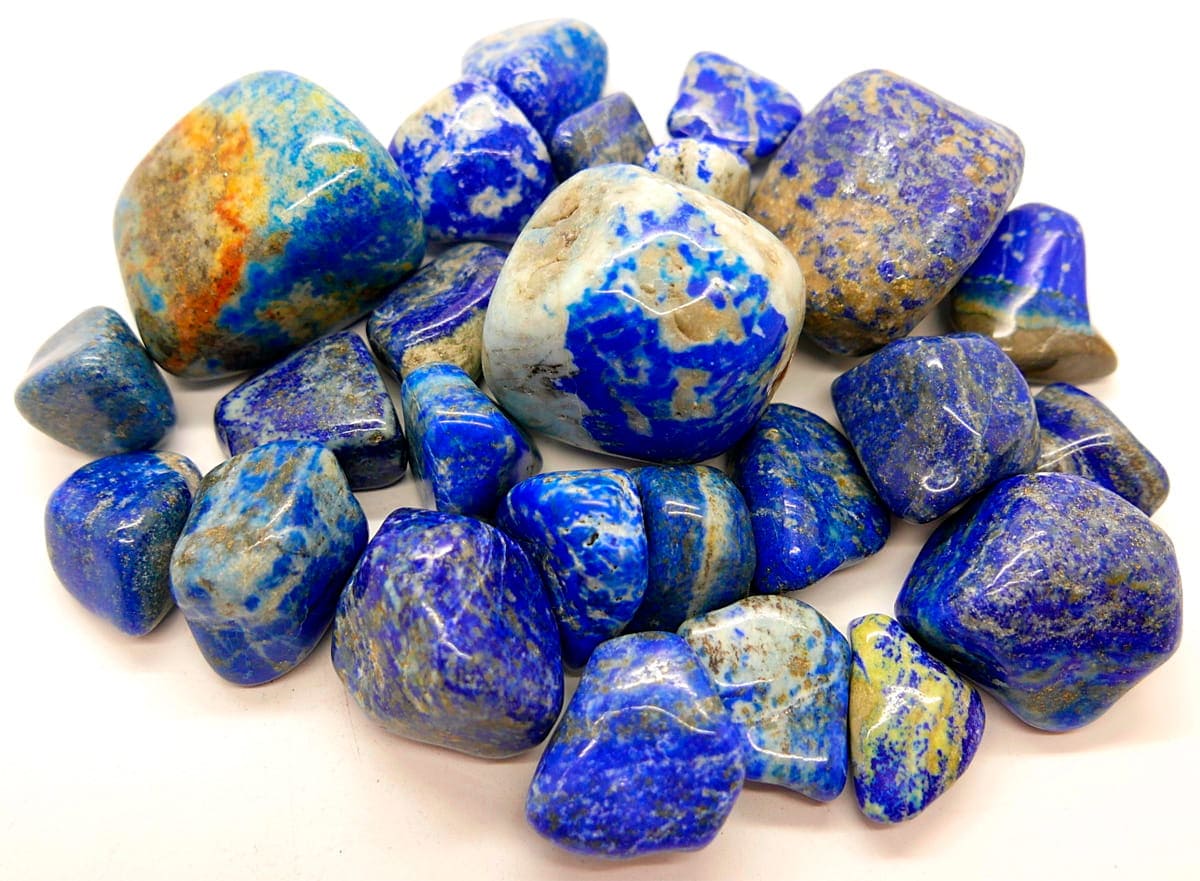
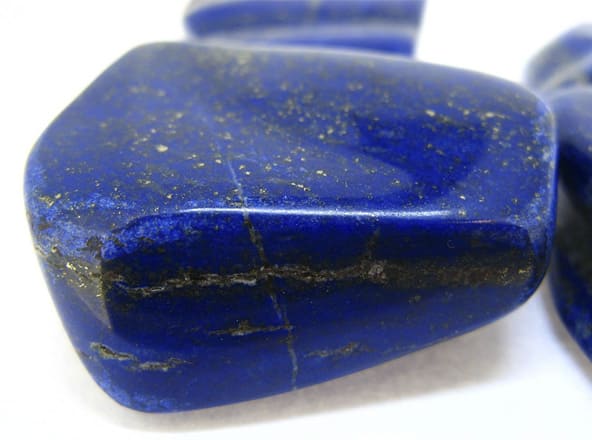
Lapis lazuli is a deep blue mineral due to its lazurite content. It usually appears associated with white calcite and inclusions of pyrite, which give it its characteristic speckled appearance with golden reflections.
It has been a highly valued stone since Antiquity for jewelry, decorative objects, utensils and artistic pigments. Pieces of lapis lazuli have been found in Egyptian pharaohs’ tombs, as well as in works and ornaments from different periods and cultures.
The name lapis lazuli comes from the Latin lapis, “stone”, the Persian lazhuward, “blue”, and the Arabic lazaward, “paradise”. It normally occurs in compact masses and, more rarely, as implanted rhombododecahedra.
Deposits
Afghanistan, Chile, United States, Russia, Argentina, Italy and Egypt.
Therapeutic properties
Lapis lazuli is considered a stone of purification and self-knowledge. It encourages introspection and mental and spiritual balance, and is often associated with the fifth and sixth chakras.
It is also related to communication, expression and intuition. It helps unblock tensions, calm the mind and work through past blockages, facilitating contact with the subconscious.