Mineralogical characteristics
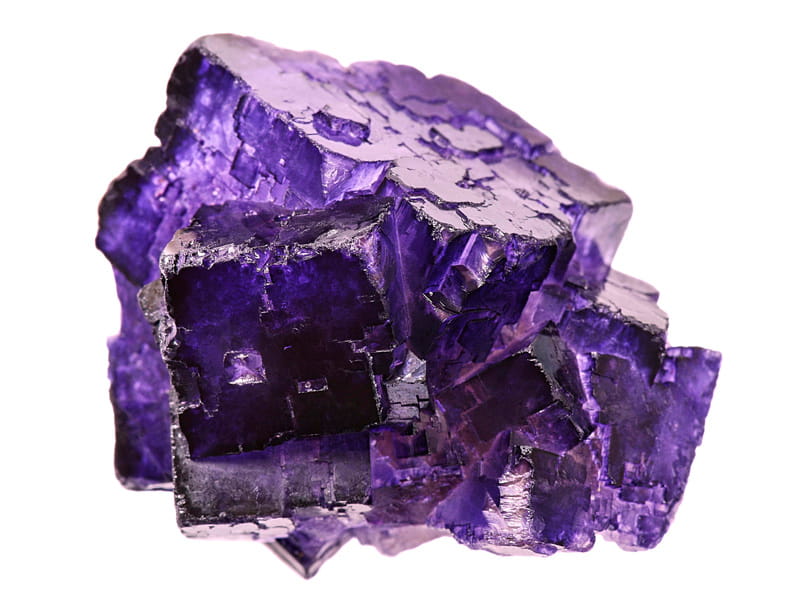
Fluorite is a calcium fluoride that forms well-developed crystals, usually cubic and sometimes octahedral. Fluorites are also found in massive, granular or compact form. It is found in hydrothermal veins, in pegmatites and in alpine fissures.
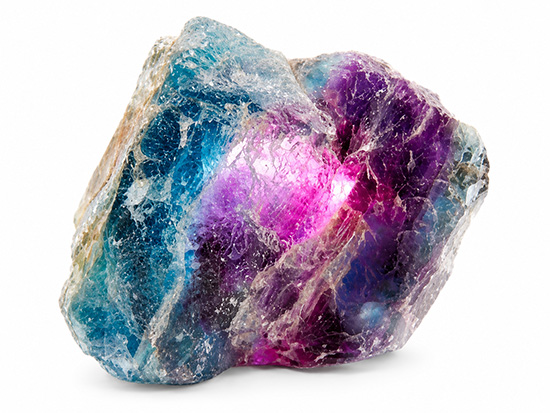
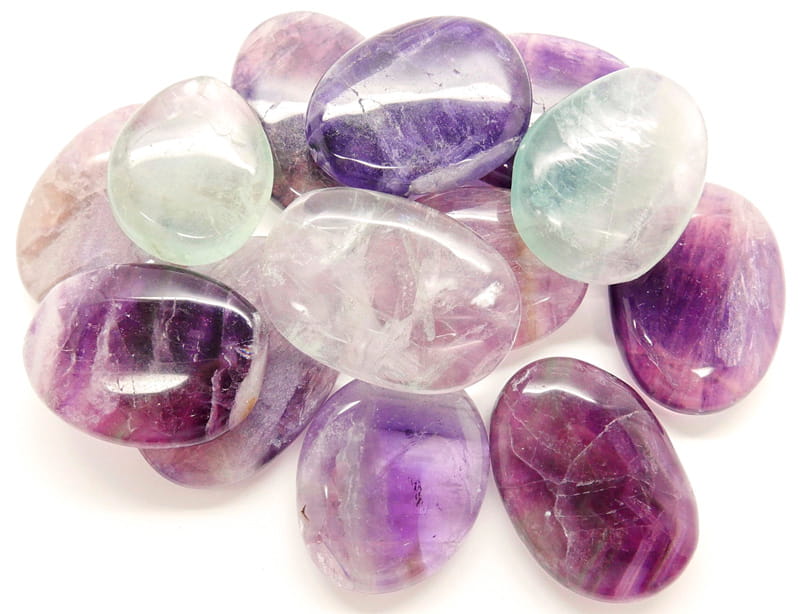
Fluorite can appear in different colors and shades, such as green, yellow, violet, blue and pink. It may be colorless or transparent if it contains no traces of other minerals, or it may also display different colors in the same piece, as in the case of banded fluorite, also known as rainbow fluorite.
The name fluorite comes from its fluorescent property, that is, its ability to emit visible light under exposure to ultraviolet light. Its name comes from the Latin “fluere”, meaning "to flow", due to the ease with which it melts when used as a flux.
Fluorite has many industrial uses, as a source of fluorine, in the manufacture of microscope lenses, to produce opalescent glass, as a flux in steel production and as a catalyst in fuel production.
Deposits
Canada, United States, China, South Africa, Mexico, Peru, Thailand, Poland, Czech Republic, Hungary, Norway, England, Spain and Germany.
Therapeutic properties
Fluorite is considered a spiritual stone of cleansing, purification and balance. It has very subtle energy and raises vibration through relaxation of the mind. It balances the hemispheres and enhances intuition. It is a stone that encourages organization and inner order. It is often used for individual and group meditations.