Mineralogical characteristics
Green quartz is a variety of quartz highly appreciated for its color and its energy associated with nature.
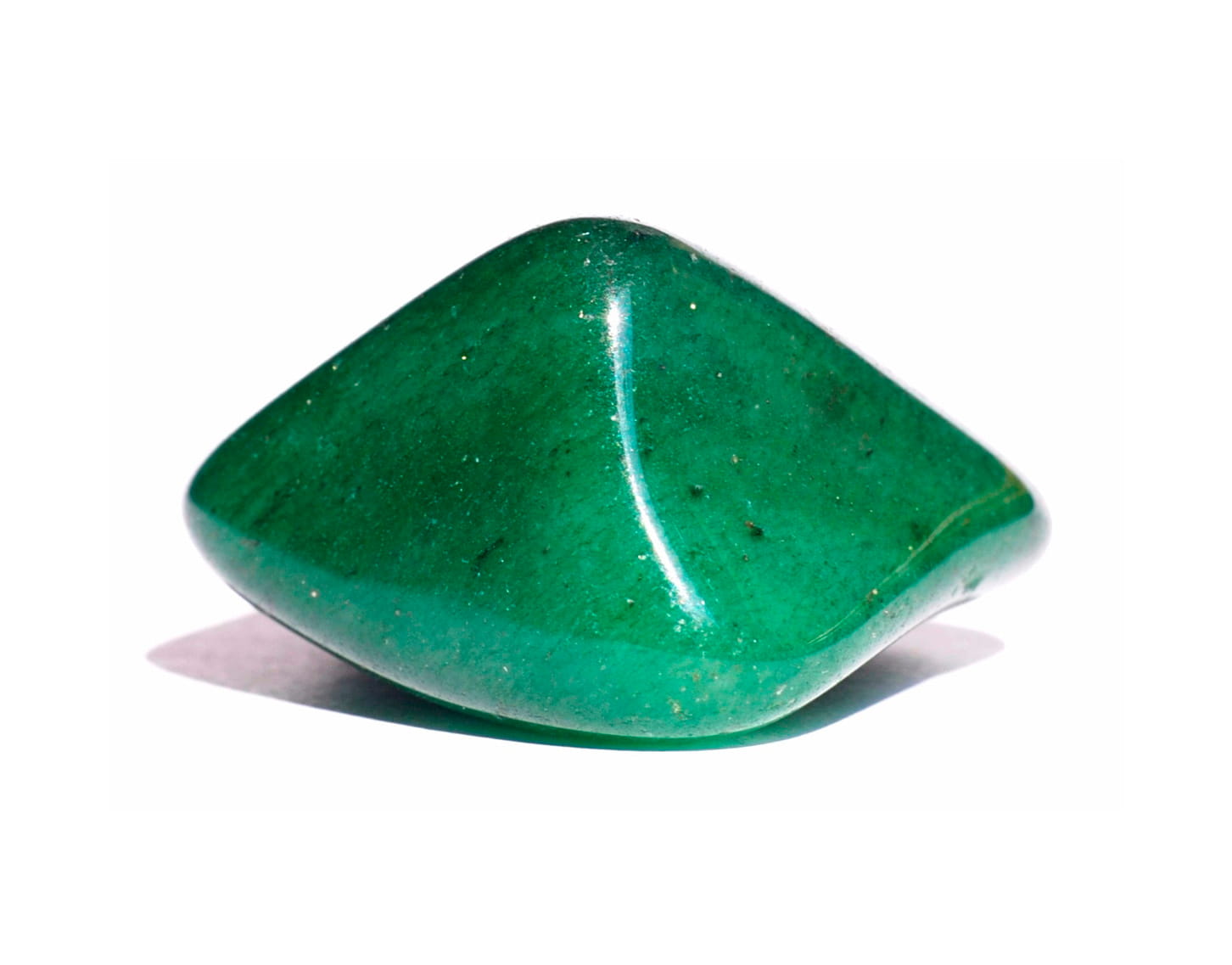
It is also known as green aventurine, as it contains small inclusions of fuchsite, a chromium-rich mineral that gives it its characteristic green tone and a slight shiny or iridescent effect. These inclusions are responsible for its vivid appearance and luminous texture, which differentiates it from other types of quartz.
In some cases, green quartz is confused with prasiolite. However, the latter is a different, rarer variety that does not display shiny inclusions and is usually more transparent. For this reason, green aventurine is the most common form when referring to green quartz in the commercial and energetic field.
From a mineralogical point of view, green quartz is mainly composed of silicon dioxide (SiO₂) and crystallizes in the trigonal system. Its hardness, from 6.5 to 7 on the Mohs scale, makes it a resistant mineral, suitable for jewelry and decorative objects. It may appear in massive, polished form or carved into cabochons and spheres.
The main deposits of green quartz are found in Brazil, India, China, Russia, United States, Italy, Tibet, Nepal, Germany, Japan, South Africa and Austria. The variety from India is especially known for the intensity of its color and its abundance.
In addition to its aesthetic value, green quartz stands out within the mineral group for its symbolism linked to natural balance, renewal and connection with the energy of the earth. It is a stone that represents growth, regeneration and harmony, qualities that make it one of the most widely used in energy therapies.
Deposits
Brazil, China, India, Russia, United States, Italy, Tibet, Nepal, Germany, Japan, South Africa and Austria.
Therapeutic properties
The properties of green quartz place it as a stone linked to balance, calm and emotional renewal.
Its gentle and constant energy promotes emotional well-being, helping to reduce stress and stabilize altered moods. It is considered an ideal stone for those seeking to recover serenity and strengthen their inner stability.
Green quartz, especially in its green aventurine form, is deeply related to the heart chakra, the energy center associated with love, empathy and harmony. Working with this stone helps unblock this chakra, encouraging emotional regeneration and promoting a more open and positive attitude toward oneself and others.
On a mental level, it enhances personal growth, helping to overcome emotional blockages and adopt new perspectives. Its energy drives processes of change from calm, allowing progress without tension or resistance. It is also associated with prosperity, as it encourages a mindset that is more receptive to opportunities.
On the physical plane, anti-inflammatory properties are attributed to it, and it is used as support for discomfort related to the skin and eyes. Although it does not replace medical treatments, it is used as an energetic complement. Overall, green quartz brings balance, renewal and a sense of integral well-being in everyday life.