Mineralogical characteristics
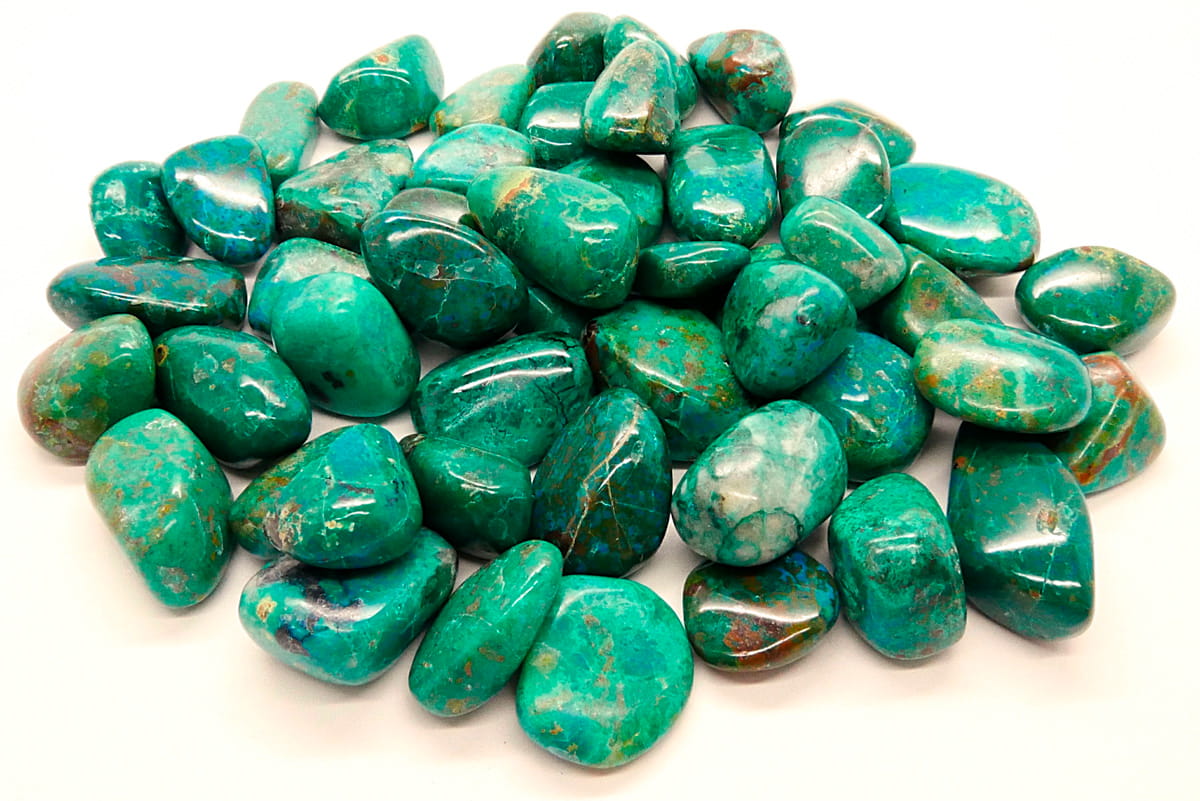
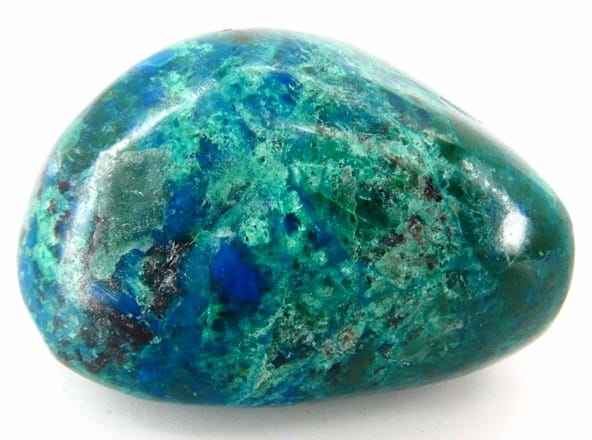
Chrysocolla is a copper hydroxide silicate that is usually found in oxidation zones of copper deposits. It does not usually form crystals and normally appears in massive form or in radial aggregates. It is a stone appreciated for its varied bluish and greenish colors and patterns. It often appears associated with malachite and azurite. Its name comes from the Greek "chrysos", meaning "gold", and "kolla", meaning "glue" or "adhesive". In Israel, the chrysocolla that appears together with turquoise and malachite is called "Eilat stone".
Deposits
Mexico, Chile, Peru, India, England, United States, Israel, Russia, Congo and Australia.
Therapeutic properties
Chrysocolla is considered the stone of femininity and symbolizes the water element, the healing green and blue. Since it helps balance the hormones that regulate cycles, it is often used to treat menstrual discomfort, in the regeneration and strengthening of tissues and to support pregnancy and childbirth. Chrysocolla brings a calming and cleansing energy. It promotes inner peace and supports meditation and communication.