Mineralogical characteristics
Basalt is a very common volcanic igneous rock in the Earth’s crust. The origin of basalt is directly related to the rapid cooling of magma when it reaches the surface after a volcanic eruption. This process prevents the formation of large crystals, giving rise to a fine or porphyritic texture, in which small phenocrysts of minerals such as olivine, augite or plagioclases can be observed.
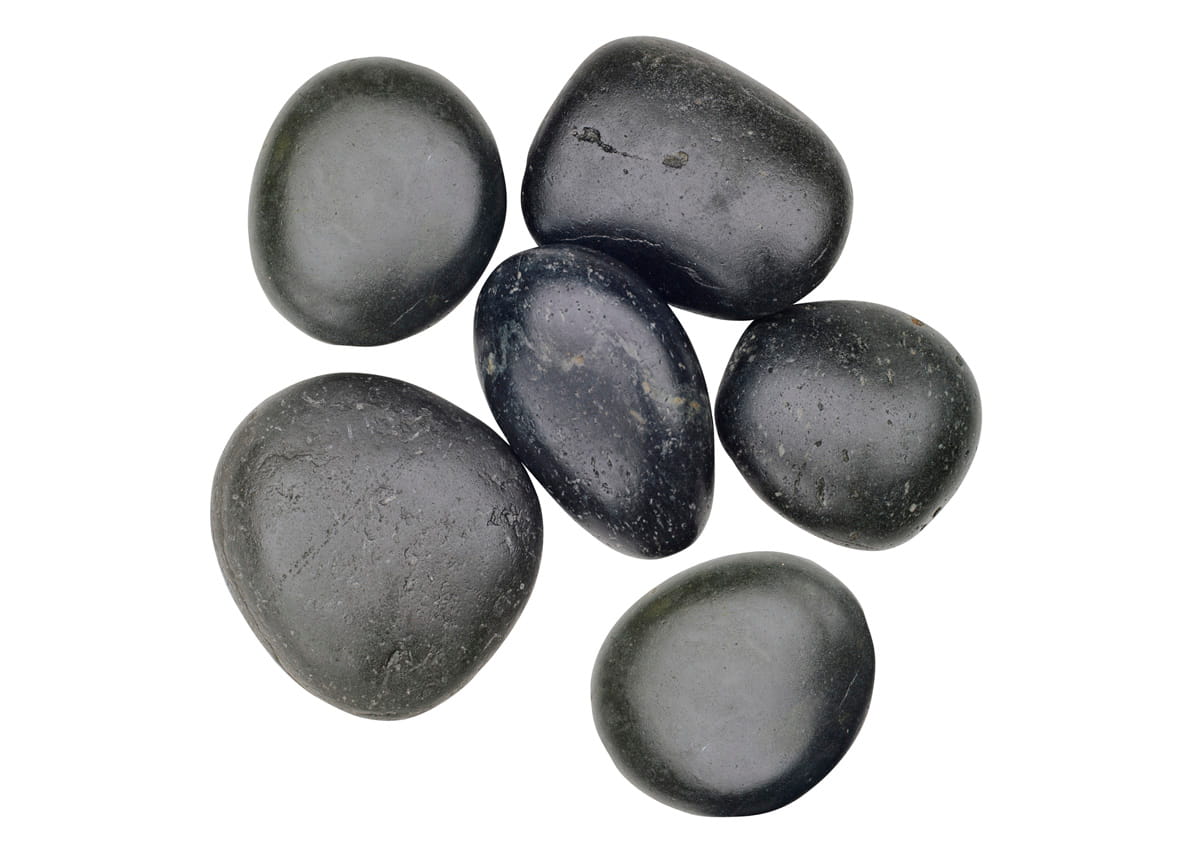
In terms of its physical properties, basalt has dark tones, generally black, grey or slightly bluish. It is mainly composed of magnesium and iron silicates, with a low silica content, which differentiates it from other lighter volcanic rocks. Among the properties of basalt, its density, resistance and ability to retain heat stand out, qualities that make it useful both in construction and in therapeutic applications.
Basalt is one of the most abundant rocks on the planet. It is found across large areas of the ocean floor and forms an essential part of the Earth’s crust. It has also been identified on the surface of the Moon, Mars and in some meteorites, demonstrating its presence in different geological environments of the solar system.
In practical terms, high-quality basalt is used in construction because of its strength. In powder form, it is used as a natural fertilizer to enrich agricultural soils. Its versatility and abundance make it a fundamental material both in industry and in geological study.
Deposits
It is found all over the world.
Therapeutic properties
The properties of basalt make it a stone associated with stability, inner strength and adaptation to change. In the energetic field, the concept of basalt transmutation refers to its symbolic ability to transform dense emotions, such as anger or frustration, into more balanced states. Its volcanic origin gives it an energy linked to inner fire and renewal.
Basalt helps reinforce grounding, connecting the body with the earth and encouraging greater presence in the current moment. This connection helps stabilize emotions and face difficult situations with greater clarity. It is considered a useful stone in processes of change, as it provides emotional support and a sense of security.
One of the best-known uses of basalt is in hot stone massages. Thanks to its ability to retain heat, it is used to relax muscles and relieve tension. This type of therapy supports circulation, stimulates cellular activity and helps release toxins. It may also contribute to balancing the nervous system and improving overall well-being.
Overall, basalt acts as an energetic support that encourages resilience, calm and physical and emotional recovery, bringing balance and stability in moments of transformation.