Mineralogical characteristics
Aragonite is a calcium carbonate whose chemical composition is identical to that of calcite, although both differ in their crystal structure. This variation makes aragonite mineral less stable than calcite and, over time, it may transform into it when exposed to water or to certain environmental conditions.
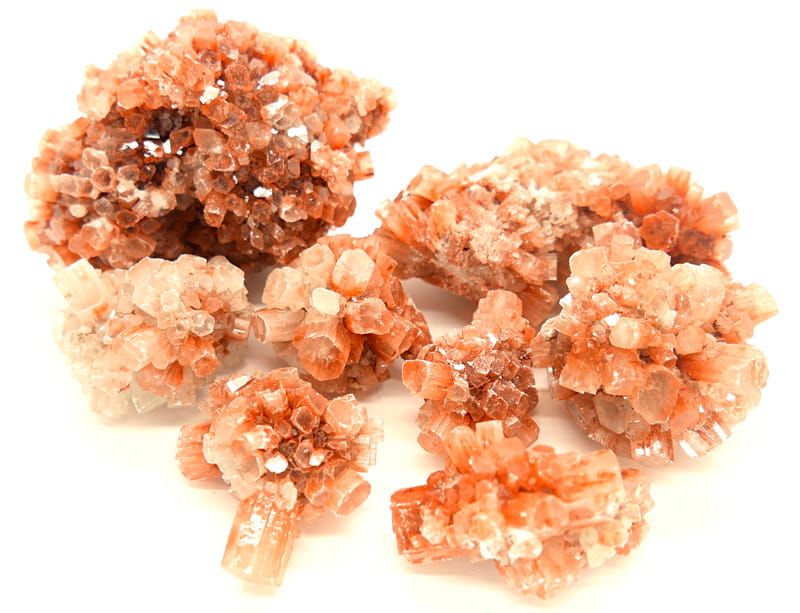
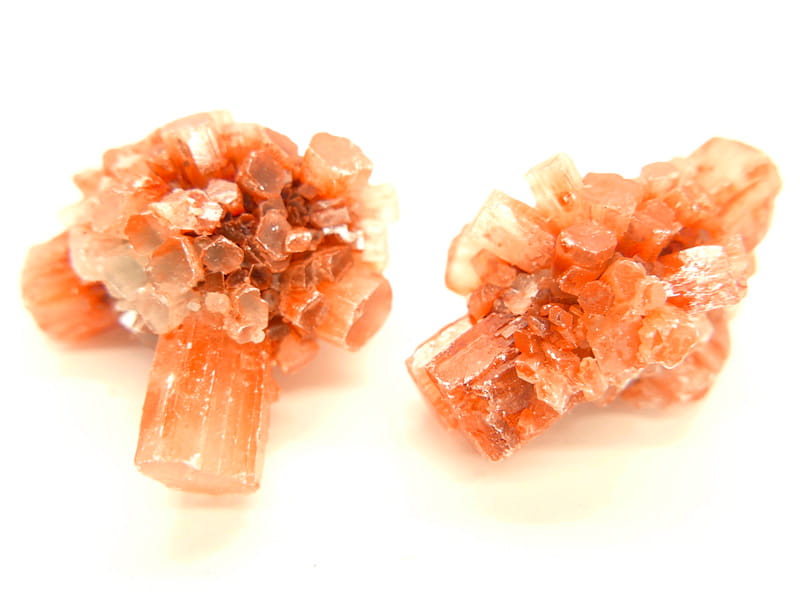
Aragonite crystals are usually orthorhombic and, in many cases, appear twinned with very characteristic forms. They may also occur in stalactitic, radial and columnar habits, and even form groupings known as “iron flower”, an arrangement that resembles a small mineral bouquet.
Its range of colors is broad: aragonite specimens can be found in brown, white, grey, bluish, green, violet or yellow tones. This chromatic variety depends on the impurities present during its formation. The mineral appears in oxidation zones, caves, cracks in volcanic rocks and deposits formed by thermal waters. In addition, aragonite plays an essential role in nature, as it forms the shells and carapaces of numerous marine invertebrates, making it an important component of ecological balance.
The name “aragonite” was assigned in 1788 by the mineralogist Abraham Gottlob Werner, who first identified it in specimens from Molina de Aragón (Guadalajara). This discovery gave rise to a name that has endured to this day and recognizes one of the most emblematic historical deposits of this mineral.
The main deposits are found in Spain, Morocco, Namibia, Great Britain, France, Germany, Italy, Hungary, the Czech Republic, Mexico, Austria and Greece. Its abundance and diverse crystal forms make aragonite valued by both collectors and practitioners of energy therapies.
The name aragonite is due to the aragonite specimens found in 1788 in Molina de Aragón (Guadalajara), by the mineralogist Abraham Gottlob Werner.
Deposits
Spain, Morocco, Namibia, Great Britain, England, France, Germany, Italy, Hungary, Czech Republic, Mexico, Austria and Greece.
Therapeutic properties
The properties of aragonite are recognized in the energetic field as tools for stability, grounding and inner calm. It is considered a mineral that helps connect deeply with the earth, reinforcing a sense of presence and security. This connection encourages a more organized and peaceful mental state, ideal for those seeking to balance intense emotions or regulate moments of energetic overload.
Aragonite is also a mineral of tolerance, associated with the ability to accept internal and external processes with greater serenity. Its energy invites one to understand natural cycles and release accumulated tension. For this reason, it is used to reduce irritability, calm impatience and encourage a more compassionate attitude toward oneself and others.
On an emotional level, this mineral helps stabilize mood and create a solid base from which to face changes or challenges. It works especially well for people who feel scattered, stressed or have difficulty maintaining concentration. Its vibration helps organize thoughts and promote clarity, allowing decisions to be made from a more realistic and balanced perspective.
It is said that aragonite acts by softening emotional burdens, facilitating the release of worries and bringing a sense of deep rest. It is also a good ally for those seeking to integrate healthy habits or maintain steady discipline in their personal development. Thanks to its calm and firm energy, this mineral becomes a support for building stability and recovering inner well-being.